
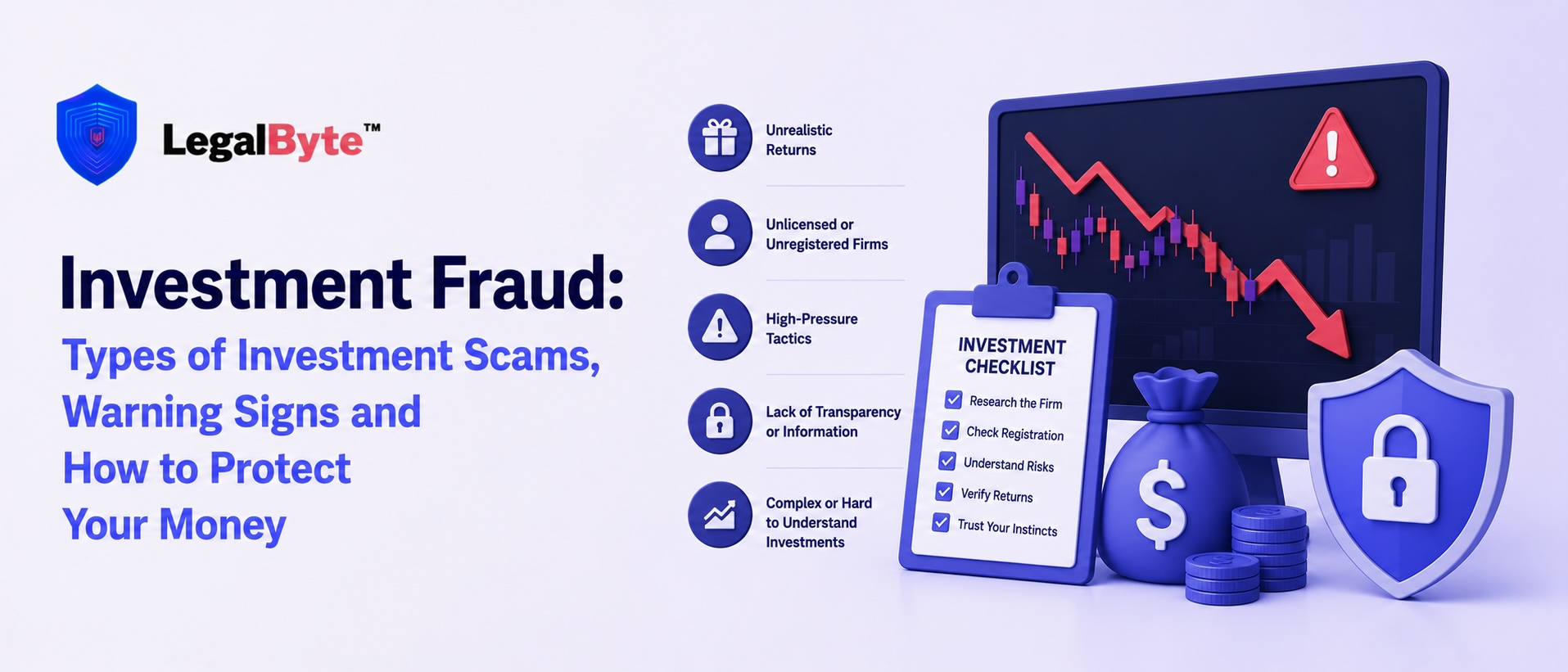
Investment fraud is a type of financial fraud in which criminals deceive people into putting money into a fake, misleading or unsuitable investment opportunity. The scam may involve stocks, cryptocurrency, forex, real estate, precious metals, bonds, private companies or an apparently legitimate online trading platform.
The most common promise is simple: high returns with little or no risk.
Victims may be told that an investment is guaranteed, that a professional trader will manage their money, or that they have access to an exclusive opportunity unavailable to the general public. In reality, the investment does not exist, the person offering it is impersonating a legitimate professional, or the website displaying the victim’s supposed profits is completely controlled by the scammers.
Investment fraud has increasingly moved online. Scammers use social media, search engines, online advertising, dating apps, WhatsApp, Telegram, fake investment websites and messaging groups to find potential victims. The FTC reported that consumers lost more than $7.9 billion to investment scams in 2025, with a median reported individual loss exceeding $10,000.
The problem is particularly serious on social media. FTC data shows that reported losses from scams originating on social media reached $2.1 billion in 2025, with investment scams accounting for approximately $1.1 billion of those reported losses.
This guide explains what investment fraud is, how investment scams work, the different types of investment fraud, how fake investment platforms operate, the warning signs to look for, and what to do if you have already lost money.
Table of Contents
What Is Investment Fraud?
Investment fraud occurs when someone uses deception to persuade another person to invest money in an opportunity that is fraudulent, misrepresented or does not exist.
The fraud can take many forms.
A scammer may:
- Invent a completely fake investment company.
- Impersonate a legitimate broker or financial adviser.
- Create a fake cryptocurrency trading platform.
- Promise guaranteed investment returns.
- Manipulate an online account to display fake profits.
- Use fake testimonials and reviews.
- Create fake celebrity endorsements.
- Invite victims into WhatsApp or Telegram investment groups.
- Use a romantic relationship to establish trust before recommending an investment.
- Operate a Ponzi or pyramid scheme.
- Promote a fake pre-IPO opportunity.
- Manipulate a stock price through a pump-and-dump scheme.
- Demand additional fees before allowing a victim to withdraw supposed profits.
The FBI’s Internet Crime Complaint Center (IC3) describes investment fraud as schemes that lure victims with promises of low- or no-risk investments that turn out to be nonexistent. Common fraudulent investments include real estate, penny stocks, Ponzi and pyramid schemes, digital assets and cryptocurrency.
How Investment Scams Work
Although investment fraud can look very different from one case to another, many scams follow a surprisingly similar pattern.
Step 1: The scammer finds a potential victim
The initial contact may come through:
- TikTok
- YouTube
- Telegram
- Dating apps
- SMS
- Online advertisements
- Search engines
- Fake financial websites
- Cold calls
A scammer may also impersonate someone the victim already knows.
The FTC has warned that scammers sometimes take over social media accounts belonging to friends and then use those accounts to promote fake investments to the person’s contacts and followers.
Step 2: Trust is established
The scammer rarely asks for a large amount of money immediately.
Instead, they may spend days or weeks establishing credibility.
They might present themselves as:
- A professional trader.
- A financial adviser.
- A successful investor.
- A cryptocurrency expert.
- A stock-market analyst.
- An investment company representative.
- A wealthy entrepreneur.
- A friend of a friend.
- A romantic partner.
They may send photographs, videos, certificates, investment charts and screenshots of supposed profits.
Some scams use entire groups (WhatsApp or Telegram) of people to create the appearance that the investment is genuine.
Step 3: The victim is shown “proof”
This is one of the most important stages.
The scammer may show:
- Trading screenshots.
- Bank balances.
- Cryptocurrency balances.
- Profit charts.
- Withdrawal confirmations.
- Fake account statements.
- Testimonials.
- Luxury cars.
- Expensive houses.
- Photos from financial conferences.
- Celebrity endorsements.
Modern scams can also use manipulated or AI-generated images and videos to make fake investors, professionals or testimonials appear genuine. FINRA warns that fraudsters can use altered or AI-generated photographs and videos to create the false impression that people have made significant profits.
Step 4: The victim makes a small investment
The scammer may initially encourage the victim to invest a relatively small amount.
For example:
$50 → $150 → $500
The objective is to get the victim psychologically committed.
Some fake platforms may even allow a small withdrawal. This can make the investment appear legitimate.
The FTC has described fake investment platforms where victims see fabricated profits and may even be permitted to withdraw a small amount, encouraging them to invest considerably more.
Step 5: The displayed profits increase tremendously
The victim logs into the investment platform and sees their balance increasing rapidly. What initially appears to be a successful investment can quickly turn into seemingly extraordinary profits, with some fraudulent platforms and investment contracts promising guaranteed returns of 300%, 1,000%, or even more.
These claims should be treated as a major warning sign. If an investment opportunity appears too good to be true, it probably is. No legitimate financial platform can guarantee investment returns, particularly returns of such extraordinary proportions. All legitimate investments involve some degree of risk, and exceptionally high promised returns are a classic indicator of potential fraud.
In many cases, the “profits” displayed on the platform are not real profits at all. The account balance does not represent money that actually exists or is available to the investor. Instead, it may simply be a number generated and manipulated by a website controlled by the scammers.
The victim may therefore believe they have turned €10,000 into €100,000, when in reality the entire balance is fictional and exists only on the fraudulent platform.
Step 6: The scammer encourages a larger investment
Once the victim believes the system works, the pressure increases.
The scammer may say:
“This is the best opportunity we have seen this year.”
“You should increase your position before the market moves.”
“You need to invest more to reach the next level.”
“The institutional allocation closes tonight.”
The victim may transfer thousands or even hundreds of thousands of dollars
Step 7: The withdrawal problem begins
Eventually, the victim attempts to withdraw the money.
This is often when the fraud becomes obvious.
The platform may suddenly say that the victim must pay:
- A tax.
- A withdrawal fee.
- A verification fee.
- A processing fee.
- A liquidity fee.
- An account upgrade fee.
- A conversion fee.
- An anti-money-laundering deposit.
- An insurance fee.
- A blockchain validation fee.
The victim is told that once the fee is paid, the money will be released. It isn’t. Instead, another fee usually appears.
The Most Common Types of Investment Fraud
Investment fraud is not a single scam. There are numerous variations.
1. Fake Investment Platforms
Fake investment platforms are among the most sophisticated online investment scams.
The victim is directed to a professional-looking website or app where they can supposedly:
- Deposit money.
- Buy investments.
- Monitor markets.
- See profits.
- Request withdrawals.
- Contact an account manager.
Everything can appear legitimate.
The platform may even contain:
- Live-looking charts.
- Trading history.
- Account balances.
- Profit calculations.
- Customer support.
- Company registration information.
- Fake regulatory details.
But the platform is not executing any genuine trades. The displayed balance is simply controlled by the criminals.
Common warning signs:
- The platform is not properly regulated.
- The company cannot be independently verified.
- You were contacted unexpectedly.
- You are pressured to deposit quickly.
- The platform guarantees returns.
- You are asked to pay money before withdrawing.
- Customer support communicates primarily through WhatsApp or Telegram.
- Payments are requested to unrelated bank accounts or cryptocurrency wallets.
2. Cryptocurrency Investment Scams
Cryptocurrency investment scams can involve:
- Bitcoin.
- Ethereum.
- Stablecoins.
- New tokens.
- DeFi projects.
- Mining schemes.
- Crypto trading platforms.
- Crypto investment funds.
The victim may be promised extraordinary returns.
A scammer may say:
“Our algorithm trades automatically.”
“Our AI predicts the market.”
“You can make 10% every day.”
“Your capital is protected.”
The victim is then directed to a fake platform or wallet.
The FTC reports that cryptocurrency investment scams frequently begin through social media or dating apps, with scammers claiming to have made substantial profits and then directing victims to fraudulent investment websites or apps.
3. Forex Trading Scams
Forex scams claim to generate profits by trading foreign currencies.
The scammer may claim to have:
- An automated trading system.
- A professional forex trader.
- An AI-powered strategy.
- Insider market information.
- A proprietary algorithm.
The victim may be shown fake trading results.
Some platforms display apparently successful trades even though no genuine trading is taking place.
The FCA warns that online trading scams commonly promote forex, contracts for difference and cryptoassets through websites and social media, often using fake celebrity endorsements and images of luxury lifestyles.
4. Stock Trading and Stock Tip Scams
Stock scams may involve supposedly exclusive recommendations for shares that are about to rise dramatically.
A scammer may claim to have:
- Insider information.
- An exclusive stock recommendation.
- A relationship with institutional investors.
- Access to a professional trading group.
- A guaranteed winning strategy.
The victim may be encouraged to buy a particular stock through a broker or platform controlled by the scammers.
The SEC has specifically warned about social-media stock tip scams in which victims are directed into investment group chats and approached by people impersonating investment professionals.
5. WhatsApp and Telegram Investment Group Scams – Professor Scams
Investment group scams have become increasingly common.
A victim may see an advertisement promising: “Join our exclusive stock trading group.”
They are then added to a WhatsApp or Telegram group. The group may contain dozens or hundreds of apparent investors.
People constantly post messages such as:
- “I made €10,000 today.”
- “Thank you, Professor!”
- “Just withdrew my profits.”
- “This stock is incredible.”
- “I doubled my account.”
The apparent investors are actually the scammers with fake accounts.
FINRA has reported a significant increase in complaints involving fraudulent investment groups promoted through social media and then moved into encrypted messaging applications such as WhatsApp.
6. Romance Investment Scams
A romance investment scam combines emotional manipulation with financial fraud.
The scammer may meet the victim through:
- Tinder.
- Bumble.
- Instagram.
- Facebook.
- WhatsApp.
- Dating websites.
The relationship gradually becomes more personal.
Eventually, the scammer mentions how they make money through:
- Cryptocurrency.
- Forex.
- Stocks.
- Trading.
- An investment platform.
The victim is encouraged to try it. Because trust has already been established, the investment recommendation may feel less suspicious.
The victim may then be directed to a fake platform showing increasing profits. The relationship may continue while the scammer persuades the victim to deposit more money.
The FTC reports that romance scams can evolve into investment scams, with criminals building relationships before introducing investment opportunities.
7. Ponzi Schemes
A Ponzi scheme uses money from newer investors to pay supposed returns to earlier investors.
There may be little or no legitimate investment activity.
For example:
- Investor A invests $10,000.
- Investor B invests $10,000.
- Some of Investor B’s money is used to make Investor A appear to receive profits.
Investor A believes the investment is successful and may recommend it to others.
The scheme requires a continuing supply of new money.
Eventually, when new investment slows down, the scheme collapses.
The FCA explains that Ponzi schemes can initially appear genuine because early investors may receive money, encouraging them to attract more investors.
8. Pyramid Schemes
A pyramid scheme focuses heavily on recruiting new participants.
Participants may be promised money for:
- Joining.
- Recruiting friends.
- Recruiting family members.
- Selling memberships.
- Bringing in new investors.
The system depends on continually recruiting new people. Once recruitment slows, the scheme can collapse.
The SEC explains that classic pyramid schemes often promise high returns in a short period while placing the primary emphasis on recruiting new participants.
9. Pump-and-Dump Investment Scams
In a pump-and-dump scheme, scammers spread misleading information to encourage people to buy an asset.
The increased buying pushes the price higher. The scammers then sell their own holdings at the inflated price.
After the promotion ends, the price can collapse, leaving other investors with substantial losses.
This type of fraud can involve:
- Penny stocks.
- Microcap stocks.
- Cryptocurrency tokens.
Investor.gov identifies pump-and-dump schemes as a form of investment fraud involving misleading information designed to create a buying frenzy.
10. Pre-IPO Investment Scams
Pre-IPO scams claim that you can buy shares in a private company before it becomes publicly traded.
The scammer may claim:
“The company is about to go public.”
“You can buy shares before institutional investors.”
“The IPO will make you rich.”
The opportunity is completely fake. Even when a real company is mentioned, the person selling the investment does not actually have access to the shares.
11. AI Investment Scams
AI has become a major marketing tool for investment scams.
Scammers may advertise:
- AI trading bots.
- AI stock predictors.
- Automated trading systems.
- AI crypto algorithms.
- “Guaranteed AI profits.”
- AI-powered wealth management.
The technology may sound sophisticated, but the claims are often exaggerated or completely fabricated.
FINRA warns that unregistered platforms and individuals have promoted supposedly proprietary AI systems with unrealistic claims such as being unable to lose money or guaranteeing winning investments.
AI does not eliminate investment risk.
If someone claims that an AI system can guarantee extraordinary returns, treat the claim as a major warning sign.
12. Real Estate Investment Scams
Real estate scams can involve:
- Fake property developments.
- Fake property investment companies.
- Fractional ownership.
- Holiday properties.
- Overseas property.
- Land developments.
- Property-backed investment schemes.
The scammer may show photographs, architectural drawings and projected rental yields.
The property may:
- Not exist.
- Not belong to the company.
- Be worth significantly less than claimed.
- Already have been sold.
- Be used in a fraudulent investment structure.
The FTC identifies real estate among the assets frequently used as the basis for investment scams.
13. Precious Metals and Commodity Investment Scams
Scammers may promote:
- Gold.
- Silver.
- Precious metals.
- Rare coins.
- Commodities.
They may claim that the investment is:
- Safe.
- Inflation-proof.
- Guaranteed.
- Government-backed.
- Stored securely.
Some schemes involve nonexistent metals or dramatically inflated valuations.
14. Investment Training and Coaching Scams
Not every investment scam involves directly stealing an investment deposit. Some scammers sell expensive courses or coaching programs.
They may advertise:
“Learn how to make $10,000 per month trading.”
“Our proven system guarantees success.”
“Quit your job in 90 days.”
Victims may pay thousands for training that contains little or no meaningful value.
The FTC warns about investment education scams that promise secret or proven methods for generating large returns with little effort.
15. Clone Firm and Impersonation Scams
A scammer may copy a genuine financial company’s:
- Name.
- Logo.
- Website.
- Registration information.
- Office address.
- Employee names.
They then pretend to be the real firm.
This is sometimes called a clone firm scam. The victim may search the company online and find that the company genuinely exists, making the scam significantly more convincing.
The problem is that the person contacting the victim is not actually associated with the legitimate company. Always verify an investment professional using contact details obtained independently from the regulator or genuine company’s official website.
16. High-Yield Investment Program Scams
High-yield investment programs, sometimes called HYIPs, promise unusually high returns over short periods.
For example:
“10% daily.”
“50% return in 30 days.”
“Guaranteed monthly income.”
The mathematics itself can be a warning sign.
Legitimate investments can produce strong returns, but high potential returns normally come with higher risk. There is no legitimate investment that can guarantee extraordinary profits with no meaningful risk.
17. Advance-Fee Investment Fraud
An advance-fee scam occurs when the victim is told they must pay money before receiving an investment, profit or withdrawal.
Examples include:
- “Pay the tax first.”
- “Pay the withdrawal fee.”
- “Pay the verification deposit.”
- “Pay the compliance fee.”
- “Pay the account upgrade.”
- “Pay the blockchain release fee.”
The fee may be followed by another fee. The supposed profits never existed.
18. Recovery Investment Scams
Unfortunately, investment fraud does not always end when the original scam ends.
A victim who has already lost money may later be contacted by another person claiming:
“We can recover your investment.”
“We traced your cryptocurrency.”
“We are working with law enforcement.”
“Your funds have been located.”
The victim is then asked to pay an upfront fee.
This is known as a recovery scam.
The FCA warns that recovery fraudsters target people who have already lost money and offer to recover their funds.
If you have already been scammed, be extremely cautious about anyone who approaches you first promising guaranteed recovery.
Investment Fraud Red Flags
The following warning signs should make you stop and investigate before sending money.
Guaranteed returns
Investment returns cannot legitimately be guaranteed.
Statements such as:
- “Guaranteed 20%.”
- “Zero-risk investment.”
- “You cannot lose.”
- “Guaranteed monthly income.”
are major warning signs.
The FTC and SEC both emphasize that every investment carries risk and that promises of high returns with little or no risk are classic indicators of fraud.
Pressure to invest immediately
Scammers may say:
- “The offer expires tonight.”
- “Only five spaces remain.”
- “You must invest before the market opens.”
- “This opportunity is confidential.”
- “Don’t tell anyone.”
- “If you wait, you will miss the opportunity.”
The objective is to prevent you from researching the investment.
Someone contacted you unexpectedly
Be particularly cautious when an investment opportunity arrives through:
- WhatsApp.
- Telegram.
- Instagram.
- Facebook.
- Dating apps.
- SMS.
- An unsolicited phone call.
The SEC specifically warns investors not to make investment decisions solely on information received through social media.
Fake testimonials
A website may contain dozens of five-star reviews.
A WhatsApp group may contain hundreds of people claiming to have made money.
A video may show someone explaining how they became wealthy.
None of this proves that the investment is genuine.
Scammers can manufacture testimonials, use actors or manipulate images and videos.
Celebrity endorsements
A scammer may use photographs, videos or deepfake material involving:
- Celebrities.
- Entrepreneurs.
- Politicians.
- Financial commentators.
- Business leaders.
The celebrity acutually never endorsed the investment.
Unregistered investment professionals
A person may claim to be:
- A broker.
- A financial adviser.
- A portfolio manager.
- An investment analyst.
Verify their registration and company independently through the relevant financial regulator. Scammers can use real brokers registration numbers to appear legitimate.
Payment to a personal bank account
Be extremely cautious if a supposed investment company instructs you to send funds to:
- A personal bank account.
- An unrelated company.
- A third-party payment processor.
- A cryptocurrency wallet.
- An account in another person’s name.
Cryptocurrency-only payments
Cryptocurrency is not inherently fraudulent, but an investment company insisting that funds must be transferred to a personal cryptocurrency wallet should be investigated carefully.
You cannot withdraw your money
This is one of the strongest warning signs.
If a platform shows a large balance but repeatedly prevents you from withdrawing it unless you first send more money, stop sending funds.
Why Do Fake Investment Platforms Show Profits?
This is one of the questions frequently asked by people who discover that they have been scammed.
The answer is simple:
The displayed balance does not represent real investments.
The victim may believe the money exists because they can see it on the screen.
But the website operator controls the numbers.
The displayed “profit” is simply part of the deception designed to convince the victim to deposit more money.
Why Do Investment Scammers Ask for More Money to Withdraw?
The withdrawal fee is often another stage of the fraud.
The scammer knows that the victim believes they have a large balance.
For example:
Displayed account balance: $150,000
The victim requests a withdrawal.
The scammer says:
“You must pay $8,000 in tax.”
The victim pays.
Then:
“You need $5,000 for AML verification.”
The victim pays again.
Then:
“Your account requires a $3,000 liquidity deposit.”
The victim continues paying because they believe $150,000 is waiting for them.
The supposed balance was never real. This is why paying another fee will not solve the problem.
How to Check Whether an Investment Company Is Legitimate
Checking whether an investment company is legitimate is not always as simple as searching for its name online or checking whether it appears to be registered. Fraudsters are becoming increasingly sophisticated and are very good at making fraudulent investment opportunities look legitimate.
Scammers may create professional websites, provide apparently genuine registration documents, use real company names and addresses, copy the details of legitimate financial firms, impersonate authorised investment professionals, produce convincing contracts and certificates, and even create fake reviews and testimonials. They may also provide regulatory registration numbers or other credentials that appear genuine at first glance but actually belong to another company.
To an everyday investor, all of these elements can make a fraudulent investment opportunity appear completely legitimate.
Professional Investment Due Diligence
For this reason, investors considering a significant investment should strongly consider having an independent professional investigator conduct due diligence before transferring funds.
An experienced investigator can look beyond the information supplied by the investment company and examine the wider picture, including corporate records, regulatory information, ownership structures, websites and domains, individuals involved, investment claims, associated companies, payment details, online history and potential links to previously identified fraudulent operations.
The objective is to establish whether the company and the claims being made to the investor can be independently verified and whether there are indicators that the opportunity may be fraudulent.
The most important principle is simple: do not rely solely on information provided by the company you are considering investing with. The people operating a fraudulent investment scheme have every reason to make the company appear legitimate.
LegalByte TrustCheck24™
LegalByte offers TrustCheck24™, a professional due diligence service designed to help individuals assess an investment company or opportunity before committing their money.
Our investigators examine the available information surrounding the company, individuals and investment opportunity to identify potential red flags, inconsistencies and indicators of fraud. A professional investigation provides an additional layer of independent due diligence before you make a potentially significant financial decision.
If you are unsure whether an investment company is legitimate, conducting professional due diligence before investing can help you avoid putting your money at risk.
What to Do If You Think You Are Being Scammed
If you suspect an investment scam:
Stop sending money
Do not pay another withdrawal fee, tax, verification fee or “release” charge simply because the scammer says it is necessary.
Do not allow them to pressure you into making another payment.
Preserve evidence
Keep:
- Emails.
- WhatsApp messages.
- Telegram messages.
- Screenshots.
- Investment contracts.
- Bank statements.
- Cryptocurrency transaction IDs.
- Wallet addresses.
- Website addresses.
- Phone numbers.
- Names used by the scammers.
- Account numbers.
- Payment instructions.
- Investment platform login details.
Do not delete the evidence.
Contact your bank or payment provider
Tell them that you believe you have been the victim of investment fraud.
Report the fraud
Depending on your location and circumstances, you may need to report the matter to:
- Your financial regulator.
- Police or national fraud-reporting service.
- The platform where you encountered the scam.
- Your bank or payment provider.
Be careful of recovery scams
After reporting an investment scam, be cautious if someone unexpectedly contacts you claiming they can recover your money for an upfront payment.
Can Investment Fraud Money Be Recovered?
Recovery depends on the circumstances.
There is no universal method that guarantees that stolen investment funds can be recovered.
The prospects may depend on:
- How the money was transferred.
- How quickly the fraud was reported.
- Whether the receiving bank account can be identified.
- Whether cryptocurrency was used.
- Whether the funds remain traceable.
- Whether the scammers used regulated exchanges or payment providers.
- Whether assets can be identified or frozen.
- The jurisdictions involved.
- The available evidence.
If cryptocurrency was involved, transaction hashes and wallet addresses can be particularly important evidence for tracing the movement of funds.
Do not send additional money to anyone who guarantees recovery.
Investment Fraud FAQ
What is investment fraud?
Investment fraud is a scam in which someone uses deception to persuade a person to invest money into a fraudulent, nonexistent or misrepresented investment opportunity.
What is the most common type of investment scam?
There is no single scam that accounts for every case. Modern investment fraud frequently involves fake online investment platforms, cryptocurrency scams, social-media investment offers, fraudulent investment groups, impersonation schemes, Ponzi schemes and relationship-based investment scams.
How do investment scammers find victims?
Scammers use social media, online advertisements, search engines, messaging applications, dating platforms, email, SMS and unsolicited calls. They may also impersonate friends, financial professionals or legitimate companies.
Can an investment scam start on WhatsApp?
Yes. WhatsApp is increasingly used for investment-group scams and direct approaches. Victims may be added to groups containing supposed investors, analysts and advisers who are actually part of the scam.
Can an investment scam start on Telegram?
Yes. Telegram can be used to recruit victims into fake trading and investment groups. The scammer may subsequently move conversations to another messaging platform and direct the victim to a fake investment platform.
Why do investment scammers show fake profits?
Fake profits are used to create confidence.
A victim who sees their account grow from $5,000 to $8,000 may believe the investment is working and become more willing to deposit additional money
Why can I see profits but not withdraw my money?
If the platform is fraudulent, the displayed profits are simply numbers controlled by the scammers.
The scammers may then invent a reason why the withdrawal cannot be completed until another payment is made.
Is a withdrawal fee always a sign of an investment scam?
Not every legitimate financial service has identical fee structures, so the existence of a fee alone does not prove fraud.
However, an unexpected demand to send additional money before you can access supposedly available profits is a major warning sign, particularly when the fee is described as a tax, verification payment, AML deposit or release charge.
Can scammers fake an investment website?
Yes.
A fraudulent website can be designed to look like a professional trading platform, complete with charts, account balances, transaction histories and customer support.
The existence of a polished website does not prove that an investment company is legitimate.
Can a scammer impersonate a real investment company?
Yes.
Criminals may copy legitimate companies, use genuine employee names and create websites or email addresses designed to resemble the real business.
Always independently verify who contacted you.
Are WhatsApp investment groups legitimate?
Some legitimate investment discussions can take place on messaging platforms, but an unsolicited WhatsApp investment group should be treated with considerable caution.
Warning signs include anonymous “professors,” “teachers” or “assistants,” guaranteed returns, fake profit screenshots, pressure to deposit money and instructions to use an unfamiliar trading platform.
Are Telegram investment groups scams?
Not necessarily, but unsolicited Telegram investment groups are frequently used by scammers.
If strangers promise extraordinary returns, show constant winning trades and pressure members to deposit money, investigate independently before sending anything.
Can a friend recommend an investment that turns out to be a scam?
Yes.
A friend’s account may have been hacked or impersonated, or your friend may unknowingly be promoting a fraudulent investment.
Can a romantic partner scam you with an investment?
Yes.
Romance investment scams use emotional trust to persuade victims to invest in cryptocurrency, stocks, forex or other financial products.
The relationship itself becomes part of the scam.
What is a pig butchering investment scam?
“Pig butchering” is a term commonly used for long-form investment fraud in which a scammer gradually builds trust with a victim before persuading them to invest through a fraudulent platform.
The relationship can be romantic, friendly or simply presented as mentorship.
The victim may initially be encouraged to make a small investment before being persuaded to deposit increasingly large amounts.
What is a Ponzi scheme?
A Ponzi scheme uses money from newer investors to make earlier investors appear to receive legitimate returns.
The system depends on continually attracting new money and eventually collapses when the flow of new investment stops.
What is a pyramid scheme?
A pyramid scheme primarily relies on recruiting new participants, with earlier participants receiving money or commissions connected to later recruits.
The structure eventually becomes unsustainable because it requires continual recruitment.
What is a pump-and-dump scam?
A pump-and-dump scheme involves promoting an asset using false or misleading information to push its price higher, followed by the promoters selling their own holdings.
Other investors may then be left holding an asset whose price falls sharply.
Are AI trading platforms legitimate?
Some legitimate financial technology products use artificial intelligence, but AI does not guarantee investment profits.
Be suspicious of anyone claiming that an AI trading system cannot lose money or guarantees extraordinary returns. FINRA has specifically warned about fraudulent AI investment schemes making these types of claims.
Is cryptocurrency investment fraud?
Cryptocurrency itself is not inherently fraudulent, but cryptocurrency is frequently used in investment scams.
Scammers may use fake crypto exchanges, fake trading platforms, fraudulent tokens or fake investment opportunities to persuade victims to transfer cryptocurrency.
Can investment scammers steal cryptocurrency?
Yes.
A victim may be instructed to send cryptocurrency directly to a wallet controlled by the scammer.
Because cryptocurrency transactions can be difficult or impossible to reverse once confirmed, it is important to verify the recipient and investment before transferring funds.
What should I do if an investment company asks me to pay tax before withdrawing?
Stop and investigate.
If the “tax” must be paid directly to the platform or to a cryptocurrency wallet before the platform releases your money, this is a significant warning sign.
What should I do if I already paid an investment scam?
Stop sending money and preserve all evidence.
Contact your bank or payment provider immediately and report the fraud to the appropriate authorities.
If cryptocurrency was involved, preserve all transaction hashes, wallet addresses and exchange records.
Should I pay a company that says it can recover my investment?
Be extremely cautious.
Investment-fraud victims are frequently targeted by secondary recovery scams. A company or individual who unexpectedly contacts you and promises guaranteed recovery is defrauding you again.
How can I report investment fraud?
The correct reporting authority depends on where you live and where the investment company operates.
You may need to report the fraud to your:
Financial regulator.
Police or national fraud-reporting authority.
Bank or payment provider.
Cryptocurrency exchange.
Social media platform.
Keep copies of everything you submit.
Final Thoughts: How to Avoid Investment Fraud
The most effective protection against investment fraud is to slow down.
Do not invest because someone creates urgency.
Do not invest because strangers in a WhatsApp group claim to be making money.
Do not invest because an attractive website shows impressive profits.
Do not invest because a celebrity appears to endorse it.
Do not invest because someone you met online says they have a secret strategy.
And never assume that an investment is legitimate simply because someone has allowed you to withdraw a small amount of money.
Before investing, independently verify the company, the individual recommending the investment, the regulatory status of the firm and the destination of your money.
If you have already transferred funds to a suspected investment scam, stop making further payments, preserve the evidence and report the fraud as soon as possible.
For victims who have lost substantial sums, particularly where bank transfers, cryptocurrency or international transactions are involved, professional investigation may help establish where funds were sent and what entities or accounts were involved.
If you believe you have been the victim of investment fraud, send and email to contact@legalbyte.io, we can assess the available evidence and explain the investigative and recovery options that may be available.