
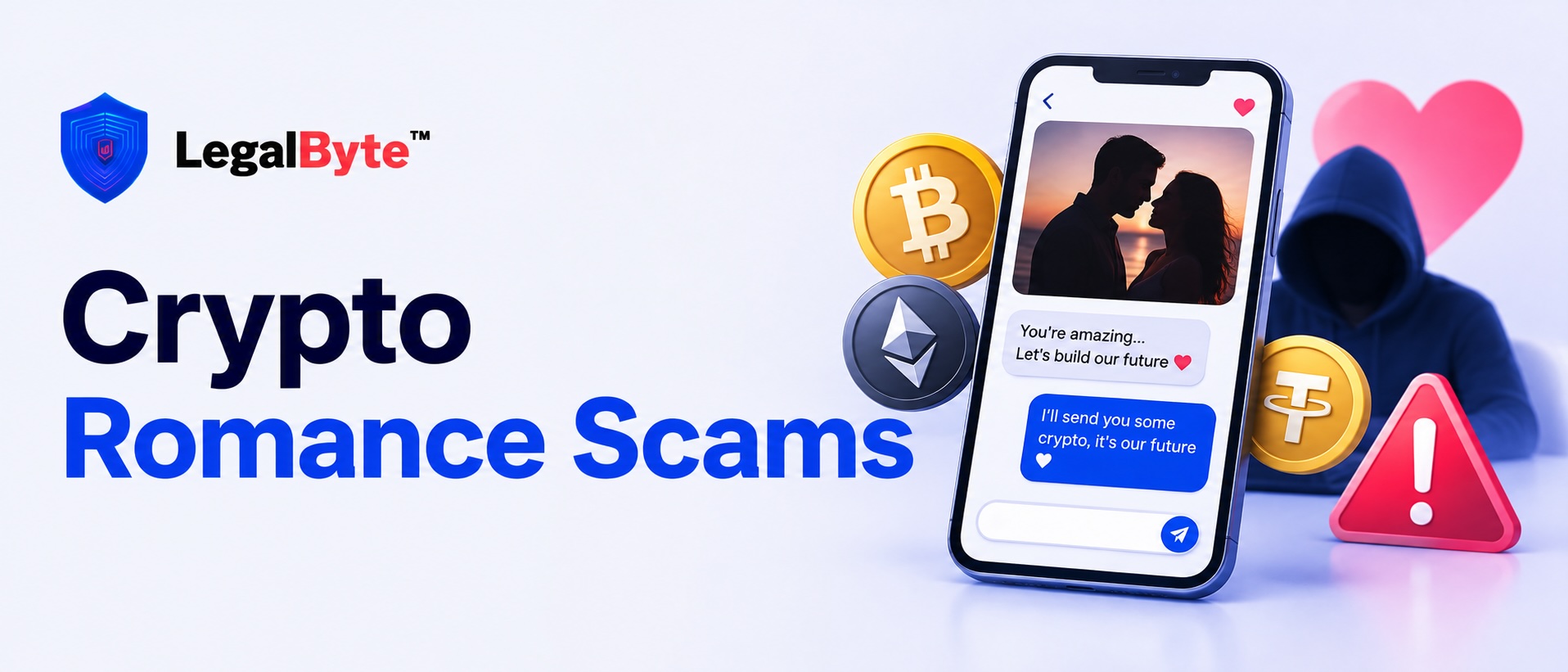
Crypto romance scams have evolved significantly with the growth of online dating, social media and cryptocurrency. Criminals can spend weeks or even months building an emotional relationship with a victim before introducing a financial request or cryptocurrency investment opportunity.
A crypto romance scam combines emotional manipulation with financial fraud. The scammer typically creates a fake identity, develops a romantic relationship with the victim and eventually persuades them to send money or invest in cryptocurrency through a fraudulent trading platform or wallet.
These scams can be particularly devastating because victims are not simply losing money; they may also believe they are losing someone they love and trust.
What is a crypto romance scam?
A crypto romance scam is a type of online fraud in which a criminal establishes a fake romantic or emotional relationship with a victim and eventually uses that relationship to obtain money or cryptocurrency.
The scammer may claim to be financially successful, knowledgeable about cryptocurrency or able to provide the victim with an investment opportunity. After gaining the victim’s trust, they encourage them to purchase cryptocurrency and transfer it to a wallet or investment platform controlled by the criminals.
The victim may initially see apparently legitimate profits displayed on the platform. In some cases, they may even be allowed to make a small withdrawal. This creates confidence and encourages them to invest substantially more.
Eventually, when the victim attempts to withdraw their funds, they may be told that they need to pay additional taxes, fees, verification charges or deposits. These demands can continue until the victim realises that the entire investment platform was fraudulent.
This type of fraud is commonly associated with pig-butchering scams, also known as relationship investment scams.
How do crypto romance scams work?
Although individual scams vary, the process often follows a recognisable pattern.
1. The scammer creates a fake identity
The criminal may use stolen photographs, fabricated employment histories and fake social-media profiles to create a convincing persona.
They may claim to be a successful entrepreneur, financial professional, cryptocurrency investor, engineer, doctor, military employee or business owner.
The objective is to create an identity that appears credible and financially successful.
2. The scammer establishes an emotional connection
The criminal begins communicating with the victim through a dating application, social media platform or another online service.
The relationship can develop very quickly. The scammer may send messages throughout the day, provide constant attention and make the victim feel that they have found a genuine romantic connection.
In some cases, the scammer spends weeks or months developing the relationship before mentioning money.
3. Cryptocurrency is introduced into the conversation
Once sufficient trust has been established, the scammer may begin discussing cryptocurrency, trading or investment opportunities.
They may claim that they have made substantial profits themselves and offer to teach the victim how to invest.
Rather than immediately asking for money, the scammer may encourage the victim to open a legitimate cryptocurrency exchange account and purchase cryptocurrency themselves.
The victim is then persuaded to transfer those assets to a wallet or platform controlled by the criminals.
4. The victim sees fake profits
The fraudulent investment website may display convincing charts, account balances, and apparently increasing profits. This is an important part of the psychological manipulation.
The victim may believe they are making significant returns and therefore become comfortable investing more money. In some cases, the scammer may allow a small withdrawal to reinforce the belief that the investment is genuine.
5. The victim tries to withdraw their money
Problems often begin when the victim attempts to withdraw a significant amount.
They may suddenly be told that they need to pay:
- A tax
- A withdrawal fee
- An account verification fee
- A security deposit
- An anti-money-laundering charge
- A wallet activation fee
- A minimum balance
- An additional investment
These demands are frequently another part of the fraud.
Paying the additional fee does not normally solve the problem. Instead, another demand may follow.
6. The scammer disappears
Eventually, the scammer may stop responding, delete their profile or block the victim. The fraudulent website may disappear or remain online but prevent the victim from accessing their funds.
By this stage, substantial amounts of cryptocurrency may have already been transferred through multiple wallets and cryptocurrency services.
Why are cryptocurrency romance scams so effective?
Crypto romance scams combine two powerful forms of manipulation: emotional trust and financial opportunity.
The victim may believe they are receiving investment advice from someone they love rather than being targeted by a criminal.
Cryptocurrency can also make these scams more difficult to understand for victims who are unfamiliar with blockchain technology. However, it is important to clarify that cryptocurrency transactions are not inherently anonymous.
Many public blockchains permanently record transactions. While a blockchain address does not normally reveal a person’s name by itself, blockchain forensic analysis can identify transaction patterns, connections to known cryptocurrency services and other useful investigative leads.
This means that cryptocurrency can be traced even after it has passed through multiple wallets.
Common warning signs of a crypto romance scam
Recognising the warning signs early can prevent significant financial losses.
The relationship develops extremely quickly
The scammer may begin expressing strong romantic feelings after only a short period of communication. Constant attention, excessive compliments and declarations of love before meeting in person should be treated cautiously.
A rapid emotional connection does not prove that someone is a scammer, but it can be an important warning sign when combined with financial requests or investment discussions.
They always have an excuse for not meeting
Scammers frequently create reasons why they cannot meet in person.
They may claim to be:
- Working overseas
- On an offshore oil rig
- Serving in the military
- Working on a remote project
- Travelling for business
- Caring for a sick relative
- Dealing with immigration or visa problems
They may also repeatedly postpone video calls or phone conversations.
The issue is not any particular occupation or nationality. The warning sign is a consistent pattern of excuses designed to prevent the victim from verifying the person’s identity.
They introduce cryptocurrency or investment opportunities
One of the strongest warning signs is when a new romantic contact begins encouraging you to invest in cryptocurrency.
They may tell you:
“I can show you how I make money.”
They may send screenshots showing apparently impressive cryptocurrency balances or investment returns.
The purpose is to make the opportunity appear proven and trustworthy.
They promise unusually high returns
Promises of guaranteed, unusually high or risk-free cryptocurrency returns should be treated as a major warning sign.
Legitimate investments involve risk. A person you have met online should not be asking you to transfer cryptocurrency based solely on their personal investment advice.
They direct you to a specific investment platform
A scammer may introduce you to a website or application that appears to be a professional cryptocurrency trading platform.
The website may contain:
- Professional-looking graphics
- Fake trading charts
- Customer-service representatives
- Fake regulatory information
- Fabricated account balances
- Fake profit figures
- Fake withdrawal confirmations
The appearance of a website does not establish that the underlying company or investment is legitimate.
You are asked to pay more money to withdraw your funds
This is one of the most important warning signs. If a cryptocurrency investment platform tells you that you must send additional cryptocurrency before you can withdraw your existing balance, stop and investigate the situation.
Paying additional money can result in further losses.
The person becomes defensive when questioned
A legitimate partner should not need to pressure you into making financial decisions. If someone becomes aggressive, defensive or emotionally manipulative when you question an investment, consider it a warning sign.
They may attempt to make you feel guilty by saying that you do not trust them or that your relationship depends on you following their instructions.
What should I do if I think I am involved in a crypto romance scam?
If you believe you are being targeted, stop sending money or cryptocurrency immediately.
Do not pay additional withdrawal fees or “recovery” payments simply because the person or platform claims that doing so will release your funds.
You should also preserve all available evidence.
This can include:
- Cryptocurrency wallet addresses
- Transaction IDs or transaction hashes
- Bank statements
- Cryptocurrency exchange records
- Screenshots of the investment platform
- Emails
- WhatsApp messages
- Telegram conversations
- Dating-app conversations
- Social-media profiles
- Website addresses
- Payment instructions
- Invoices or contracts
- Names and contact details used by the scammer
Do not delete conversations or accounts before preserving the relevant information.
If possible, avoid confronting the scammer about your investigation before evidence has been preserved and professional advice has been obtained.
Can cryptocurrency from a romance scam be traced?
In many cases, cryptocurrency transactions can be traced through blockchain analysis.
Public blockchains record transactions and allow investigators to follow the movement of assets between addresses.
A blockchain forensic investigation may examine:
- The original transaction
- Receiving wallet addresses
- Subsequent transfers
- Clusters of related addresses
- Cryptocurrency exchanges
- Payment processors
- Cross-chain transactions
- Known service providers
- Transaction patterns
- Potential links between wallets and real-world entities
However, tracing cryptocurrency does not automatically mean that the money can be recovered.
The investigation must establish where the assets went and determine what practical legal or investigative options may be available.
Can stolen cryptocurrency from a romance scam be recovered?
Recovery is sometimes possible, but it cannot be guaranteed.
The prospects depend on numerous factors, including how quickly the fraud is reported, where the cryptocurrency was transferred, whether the assets remain identifiable, whether they reached a regulated exchange or other identifiable service, the jurisdictions involved and what evidence is available.
Blockchain tracing can help establish the movement of funds, but tracing and recovery are separate processes.
An investigation may identify where the cryptocurrency travelled without necessarily resulting in the immediate return of the assets.
This is why victims should be cautious of anyone promising guaranteed cryptocurrency recovery.
What is blockchain forensics?
Blockchain forensics is the process of analysing blockchain transactions and associated data to investigate the movement of cryptocurrency and digital assets.
Forensic investigators can use blockchain intelligence tools to reconstruct transaction flows, identify relationships between wallet addresses and determine whether funds interacted with known cryptocurrency businesses or other identifiable services.
In fraud cases, blockchain forensics can form part of a wider investigation that also examines communications, financial records, websites, corporate information and other evidence.
Can a crypto romance scammer be identified?
A cryptocurrency wallet address alone generally does not reveal the identity of the person controlling it.
However, investigators may be able to identify useful attribution leads by combining blockchain analysis with other sources of evidence.
For example, a wallet may interact with a cryptocurrency exchange that has customer-identification information. Other evidence may also establish connections between cryptocurrency addresses, websites, companies, telephone numbers, email addresses or individuals.
Obtaining information held by third parties may require appropriate legal or regulatory processes.
What is a pig-butchering scam?
A pig-butchering scam is a long-term investment fraud in which criminals build trust with a victim before persuading them to invest increasingly large amounts of money.
The term is associated with the practice of gradually “fattening” the victim before attempting to extract as much money as possible. These scams commonly combine romance, social engineering and cryptocurrency investment fraud.
The victim may initially believe they have found a romantic partner who is helping them become financially successful. In reality, the apparent investment profits and trading platform are entirely fraudulent.
How LegalByte can help investigate a crypto romance scam
At LegalByte, cryptocurrency fraud investigations can involve blockchain analysis, asset tracing, digital evidence review and forensic reporting.
Our investigators can examine available transaction data and other evidence to reconstruct the movement of cryptocurrency and identify relevant leads.
Depending on the circumstances of the case, the investigation may examine:
- Cryptocurrency wallet addresses
- Transaction hashes
- Exchange transactions
- Bank transfers
- Fraudulent investment platforms
- Companies and individuals connected to the scheme
- Digital communications
- Websites and online infrastructure
- Related cryptocurrency transactions
The findings can be documented in a forensic report that may assist with communications with financial institutions, law enforcement, regulators or legal professionals, depending on the circumstances.
Think you have been targeted by a crypto romance scam?
If you have lost cryptocurrency through a romance or investment scam, do not send additional funds to the scammer or to someone claiming they can guarantee recovery.
Preserve your evidence and seek professional advice as soon as possible.
Contact LegalByte at contact@legalbyte.io to discuss your circumstances and the investigative options that may be available.